Why Section 16 of GST Creates So Much Anxiety 😟
If you’ve ever dealt with GST compliance, you already know this:
Input Tax Credit (ITC) is the backbone of GST, but also its biggest pain point.
On paper, Section 16 promises seamless credit.
In reality, ITC is often denied for reasons beyond the taxpayer’s control—supplier defaults, investigation-based suspicions, or procedural gaps.
“You did everything right—paid your supplier, received the goods, filed your GST returns—yet your Input Tax Credit is denied.
Is this what GST law really intends?”
Two recent High Court rulings—
- Santhom Metacast (P.) Ltd. (Kerala HC)
- Mrs. Anjita Dokania (Calcutta HC)
have brought much-needed clarity on how Section 16 should be applied fairly and lawfully.
Let’s break this down calmly and practically.
2. Legislative Background – What Section 16 Actually Intends
The basic promise of GST:
Tax should be paid only on value addition, not on the entire transaction chain.
Section 16(1) says:
A registered person shall be entitled to ITC on goods or services used in business.
Section 16(2) adds conditions:
You can take ITC only if:
- You have a valid tax invoice
- You received the goods/services
- Tax is paid to the government
- You have filed returns
⚠️ This is where disputes start
Because the department often interprets these conditions very rigidly.
3. Case 1: Santhom Metacast (P.) Ltd. – Kerala High Court (2026)
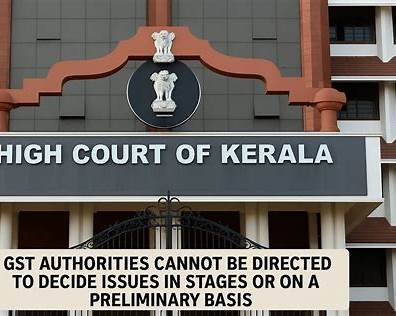
What happened in simple words:
- The taxpayer claimed ITC on purchases
- The department suspected bogus transactions
- ITC was questioned during intelligence proceedings
- No clear finding that goods were not received
What the Court said (in essence):
ITC cannot be denied merely on suspicion or investigation assumptions.
Key takeaway:
- If invoices exist
- If movement/receipt of goods is not disproved
- If business usage is evident
👉 ITC is a legal right, not a discretionary favor
The Court emphasized substance over suspicion.
4. Case 2: Mrs. Anjita Dokania – Calcutta High Court (2026)

What happened:
- ITC was denied based on supplier-related issues
- The buyer had complied with all visible requirements
- Department tried to shift supplier’s fault onto the buyer
What the Court clarified:
A bona fide purchaser cannot be punished for the supplier’s default unless connivance or fraud is proven.
Why this ruling matters a lot:
This judgment reinforces that:
- GST law does not presume guilt
- Buyer’s ITC cannot be mechanically reversed
- Department must show active involvement or knowledge
5. Comparative View – Earlier Judgments on Similar Issues
Earlier High Courts have consistently held:
- ITC cannot be denied solely due to supplier default
- Department must prove fake transactions, not assume them
- Natural justice must be followed before reversal
These 2026 judgments continue and strengthen that judicial trend.
📌 The message is now loud and clear:
Genuine taxpayers deserve protection.
6. What Statutory Provisions Were Interpreted?
Both courts closely examined:
- Section 16(1) – Right to ITC
- Section 16(2) – Conditions
- Principles of natural justice
- Burden of proof on the department
The courts did not dilute the law,
They only prevented misuse of the law.
7. How Courts Are Interpreting Section 16 Today
Modern judicial thinking is moving towards:
- Practical compliance, not impossible compliance
- Buyer diligence, not buyer punishment
- Evidence-based denial, not system-based denial
In short:
GST is a tax on transactions, not a trap for honest businesses.
8. Core Principles Emerging from These Judgments 🧠
Here’s the essence, friend-to-friend:
- ITC is a vested right, not a concession
- Suspicion is not proof
- Supplier default ≠ buyer fault
- Department must investigate facts, not assumptions
- Natural justice is mandatory before ITC denial
9. Practical Implications for Directors & Companies
What directors should ensure (realistic, not idealistic):
- Maintain proper invoices
- Track actual receipt of goods/services
- Do basic supplier due-diligence (GST status, filing trend)
- Keep transport & payment records handy
⚠️ You are not expected to police the GST system, only your business.
10. The Way Forward – A Balanced GST Ecosystem
These judgments show a positive shift:
- Courts are restoring trust in GST
- Honest businesses are getting judicial protection
- Arbitrary ITC reversals are being questioned
What businesses should do:
- Stay compliant, not paranoid
- Document reality, not perfection
- Challenge unlawful ITC denial confidently
Frequently Asked Questions (FAQs) – Section 16 ITC under GST
1. What is Input Tax Credit (ITC) under Section 16 of the GST Act?
Input Tax Credit (ITC) is the credit of GST paid on purchases of goods or services used in business, which can be adjusted against output GST liability.
Section 16 of the CGST Act, 2017 provides the statutory right to claim ITC, subject to certain conditions.
2. Can ITC be denied merely because the supplier has defaulted in paying GST?
No.
As clarified by recent High Court rulings, ITC cannot be denied to a bona-fide buyer solely due to supplier default, unless the department proves that the buyer was involved in fraud, collusion, or had knowledge of the default.
3. What did the Kerala High Court decide in the Santhom Metacast case?
The Kerala High Court held that ITC cannot be denied on the basis of suspicion or investigation alone.
If the taxpayer has valid invoices and actual receipt of goods is not disproved, ITC remains a legitimate entitlement under Section 16.
4. What is the significance of the Anjita Dokania judgment of the Calcutta High Court?
The Calcutta High Court emphasized that a genuine purchaser cannot be punished for lapses committed by the supplier.
The burden lies on the tax department to prove active involvement or knowledge of wrongdoing before denying ITC.
5. Is ITC a concession or a legal right under GST?
ITC is a statutory right, not a concession.
Courts have repeatedly held that ITC is an integral part of the GST framework, and it cannot be denied arbitrarily or mechanically.
6. Can ITC be denied during investigation without issuing a proper show cause notice?
No.
ITC cannot be denied or reversed without:
- Issuing a valid show cause notice
- Granting an opportunity of being heard
- Passing a reasoned order
Any action taken in violation of natural justice is legally unsustainable.
7. What documents should a taxpayer maintain to protect ITC claims?
A taxpayer should maintain:
- Valid tax invoices
- Proof of receipt of goods or services
- Payment records
- Transport or delivery documents (where applicable)
- Basic supplier verification records
These documents help establish bona fide business transactions.
8. Can ITC be denied if the department suspects fake or circular transactions?
Suspicion alone is not sufficient.
The department must prove with evidence that the transactions were fake or that goods/services were never supplied. Courts have clearly rejected denial of ITC based purely on assumptions.
9. Are directors personally liable for wrongful ITC claims by the company?
Directors may be held liable only if there is evidence of active involvement, intent, or knowledge of fraud.
Mere designation as a director does not automatically attract liability for ITC disputes.
10. What is the practical takeaway for businesses after these 2026 judgments?
The key takeaway is reassurance:
- Genuine taxpayers are protected
- ITC cannot be denied mechanically
- Courts are insisting on fairness, evidence, and due process
Businesses should remain compliant, well-documented, and confident in asserting their legal rights.
11. Will these judgments help taxpayers in future GST litigation?
Yes.
These rulings strengthen the judicial trend that protects bona-fide taxpayers and discourages arbitrary ITC reversals. They will be heavily relied upon in future GST disputes involving Section 16.
12. Should taxpayers challenge wrongful ITC denial?
Absolutely.
If ITC is denied without proper evidence, due process, or legal reasoning, taxpayers should challenge such actions through appeal or writ remedies, as courts have shown consistent support for genuine cases.