The Indian market for electric two-wheelers has witnessed a significant shift in recent years, driven by rising fuel prices and improved EV infrastructure.

As the government continues to support the adoption of electric vehicles, buyers are increasingly looking for the most suitable options. When comparing electric scooters, key factors such as range and price play a crucial role.
Understanding these factors is essential to making an informed decision. With various models available, it’s crucial to assess the range and pricing of different electric scooters to find the best fit.
Key Takeaways
- Electric two-wheelers are gaining popularity in India due to rising fuel prices and improved infrastructure.
- Government support is driving the adoption of electric vehicles.
- Range and price are key factors to consider when comparing electric scooters.
- Assessing different models is crucial to making an informed decision.
- The Indian market offers various electric scooter models with varying ranges and prices.
The Rise of Electric Scooters in India
India is witnessing a rapid growth in the adoption of electric scooters. This surge is driven by increasing environmental awareness, rising fuel costs, and government incentives for electric vehicles.
The Growing Popularity of EV Scooters
Electric scooters are becoming a preferred mode of transportation in urban areas due to their eco-friendly nature and lower operating costs. The most affordable electric scooter in India, the Ola Gig, priced at Rs. 39,999, has significantly contributed to their popularity.
Cost Comparison: Petrol vs Electric Charging
One of the key factors driving the adoption of electric scooters is the cost savings they offer. Charging an electric scooter is significantly cheaper than fuelling a petrol scooter. For instance, the cost of charging an electric scooter can be as low as Rs. 1.5 per unit, whereas the cost of petrol for a similar scooter can range from Rs. 5 to Rs. 7 per kilometre.
Government Initiatives for Electric Mobility
The Indian government has implemented various initiatives to promote electric mobility, including subsidies and incentives for EV manufacturers. These initiatives have played a crucial role in driving the adoption of electric scooters in the country.
Key Factors to Consider When Buying an Electric Scooter
With the rising demand for electric scooters, understanding the essential factors to consider is crucial. As you navigate the market, several key aspects will influence your decision.
Range and Battery Capacity
The range of an electric scooter is a critical factor, determining how far you can travel on a single charge. For instance, the TVS iQube offers a range of 212 km, while the Ola S1 Pro boasts an impressive 242 km. Battery capacity directly impacts this range, so it’s essential to consider your typical usage and choose a scooter that meets your needs.
Charging Infrastructure and Time
Charging infrastructure is another vital consideration. Look for scooters with readily available charging points and consider the charging time. Fast charging capabilities can be a significant advantage, allowing you to quickly recharge your scooter and get back on the road.
Price and Value Proposition
The price of an electric scooter varies widely, depending on factors such as range, battery capacity, and features. Assessing the value proposition involves weighing the cost against the benefits, including savings on fuel and lower maintenance costs. It’s crucial to evaluate what you’re getting for your money and choose a scooter that offers the best value.
By carefully considering these factors, you can make an informed decision and find the perfect electric scooter for your needs.
Best Electric Scooters in India 2026: Range, Price & More
India’s electric scooter landscape in 2026 is more vibrant than ever, with several models standing out for their innovative features, range, and pricing. As the demand for eco-friendly transportation grows, manufacturers are responding with cutting-edge technology and design.
Ola S1 Pro 2026 Edition
The Ola S1 Pro 2026 Edition is a significant upgrade over its predecessors, boasting enhanced performance and features. With a price tag of Rs. 1,30,595, it is positioned as a premium offering in the electric scooter market.
Performance Specifications
The Ola S1 Pro is powered by an advanced electric motor that delivers impressive acceleration and a top speed of 120 km/h. The scooter also features regenerative braking, enhancing its efficiency.
Range and Battery Details
The Ola S1 Pro 2026 Edition comes with a high-capacity battery that offers a range of up to 181 km on a single charge. The battery is designed for durability and can be fully charged in 6 hours using a fast charger.
Price and Value Assessment
Priced at Rs. 1,30,595, the Ola S1 Pro 2026 Edition offers excellent value for its features and performance. It is competitively priced compared to other premium electric scooters in the market.
Ather 450X 2026 Model
The Ather 450X 2026 Model continues Ather Energy’s tradition of innovation, with significant upgrades in performance and features. It is priced at Rs. 1,47,230, positioning it as a high-end electric scooter.
Performance Specifications
The Ather 450X boasts a powerful electric motor with rapid acceleration and a top speed of 90 km/h. It also features advanced technology, including Bluetooth connectivity and a touchscreen display.
Range and Battery Details
The Ather 450X 2026 Model offers a range of up to 146 km on a single charge. The scooter’s battery is designed for fast charging, taking 4 hours to reach full charge.
Price and Value Assessment
At Rs. 1,47,230, the Ather 450X 2026 Model is priced at a premium, reflecting its advanced features and performance capabilities. It offers good value for those seeking high-end electric scooter technology.
TVS iQube 2026 Version
The TVS iQube 2026 Version is another notable electric scooter, offering a blend of performance, range, and affordability. It is a strong contender in the electric scooter market.
Performance Specifications
The TVS iQube features an electric motor that provides good acceleration and a top speed of 78 km/h. It also includes regenerative braking to enhance efficiency.
Range and Battery Details
The TVS iQube 2026 Version has a range of up to 100 km on a single charge. The battery can be fully charged in 5 hours, making it convenient for daily use.
Price and Value Assessment
The TVS iQube is competitively priced, offering good value for its features and performance. It is an attractive option for those looking for an affordable electric scooter.
Bajaj Chetak Premium 2026
The Bajaj Chetak Premium 2026 is a stylish and feature-rich electric scooter that has gained popularity for its design and performance.
Performance Specifications
The Bajaj Chetak Premium is equipped with an electric motor that delivers good performance and a top speed of 60 km/h. It features advanced technology, including a digital display and remote diagnostics.
Range and Battery Details
The Bajaj Chetak Premium 2026 offers a range of up to 95 km on a single charge. The battery is designed for efficient charging, taking 5 hours to fully charge.
Price and Value Assessment
Priced competitively, the Bajaj Chetak Premium 2026 offers excellent value for its features and design. It is a great option for those seeking a stylish and reliable electric scooter.
Understanding Real-World Range vs Advertised Range
The disparity between the advertised range of an electric scooter and its actual performance is a critical consideration for potential buyers. Manufacturers often provide range estimates based on ideal conditions, but real-world usage can vary significantly.

Factors Affecting Electric Scooter Range
Several factors can influence the actual range of an electric scooter. These include:
- Riding Style: Aggressive acceleration and braking can reduce the scooter’s range.
- Terrain: Hilly or uneven terrain requires more energy, thus reducing the range.
- Weather Conditions: Extreme temperatures can affect battery performance.
- Load: Carrying heavy loads can decrease the scooter’s efficiency.
- Battery Health: The age and condition of the battery impact its capacity.
How to Calculate Actual Range Expectations
To estimate the real-world range of an electric scooter, consider the manufacturer’s specifications and adjust them based on your specific needs and conditions. Here’s a simple method:
- Start with the manufacturer’s range estimate.
- Adjust for your riding style: subtract 10-20% for aggressive riding.
- Consider the terrain: subtract 5-15% for hilly areas.
- Account for weather conditions: subtract 5-10% for extreme temperatures.
By taking these factors into account, you can get a more accurate estimate of your electric scooter’s real-world range.
Charging Cost Analysis for Electric Scooters
The cost of charging an electric scooter is a significant factor in determining its overall value. As more people consider switching to electric vehicles, understanding the charging costs becomes crucial.
Simple Calculation Method for Charging Costs
To calculate the charging cost of an electric scooter, you need to know the battery capacity and the cost of electricity. For instance, if your electric scooter has a battery capacity of 3 kWh and the electricity cost is Rs. 8 per kWh, the total cost to charge the scooter is Rs. 24. Given that the cost of charging an electric scooter is approximately Rs. 0.23 per km, it’s clear that electric scooters offer significant savings over petrol-powered scooters.
Here’s a simple formula to calculate the charging cost: (Battery Capacity in kWh * Cost of Electricity per kWh) / Range of the Scooter in km.
Comparison with Petrol Scooter Running Costs
When comparing the running costs, electric scooters are generally more economical. For example, if a petrol scooter costs around Rs. 1.5 per km to run, an electric scooter costing Rs. 0.23 per km offers substantial savings. Over a distance of 1000 km, an electric scooter would save you approximately Rs. 1270 compared to a petrol scooter.
This cost advantage, combined with lower maintenance costs, makes electric scooters an attractive option for daily commuters.
Maintenance Costs of Electric Scooters
One of the significant advantages of electric scooters is their lower maintenance cost, making them an attractive option for many Indians. With fewer moving parts compared to petrol scooters, electric scooters reduce the need for frequent servicing.
Common Maintenance Requirements
Despite having lower maintenance costs, electric scooters still require regular checks to ensure optimal performance. Key maintenance tasks include:
- Checking and maintaining the battery health
- Inspecting the brakes and tyres
- Ensuring the electrical systems are functioning correctly
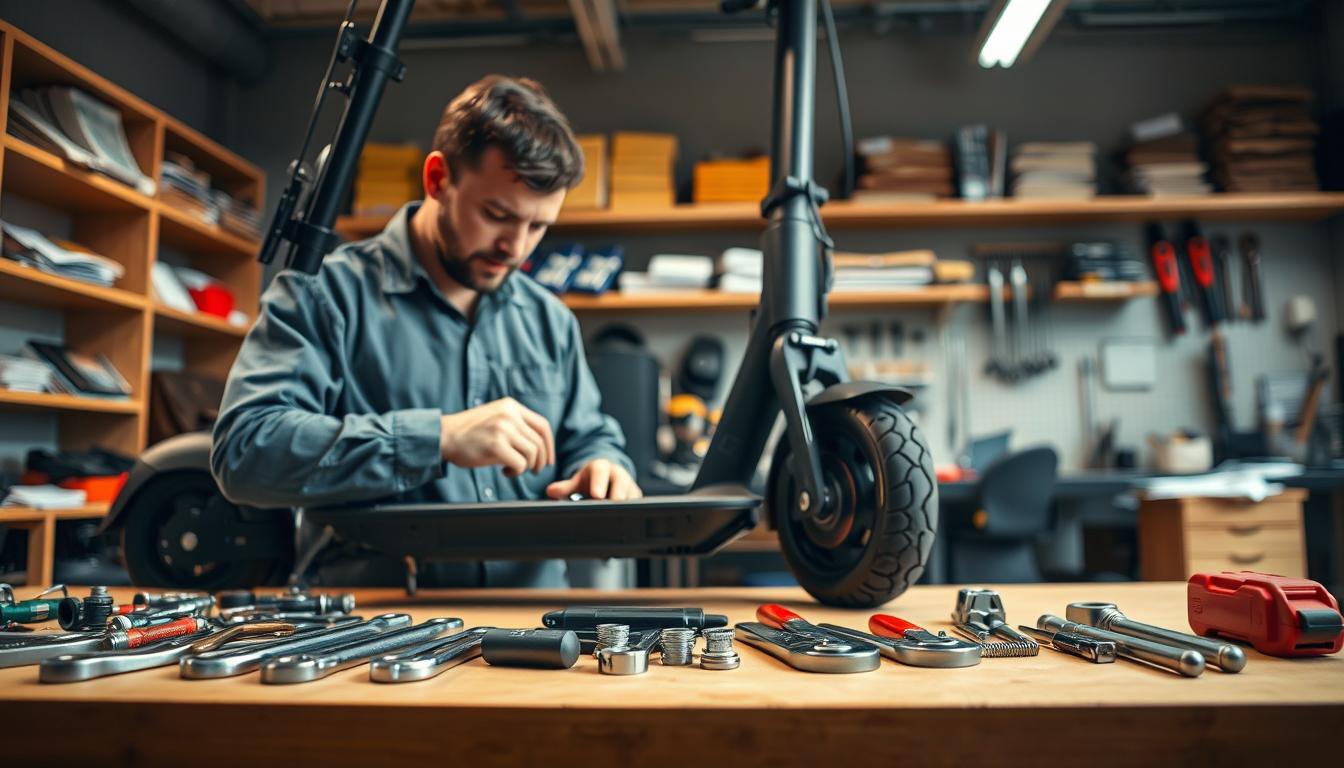
These tasks are relatively simple and can be performed at home or by a professional. It’s also worth noting that electric scooters do not require oil changes, which significantly reduces their maintenance needs.
Long-term Cost Benefits
The long-term cost benefits of electric scooters are substantial. With lower maintenance costs and the savings on fuel (electricity is generally cheaper than petrol), electric scooters offer a cost-effective mode of transportation. Additionally, many electric scooter manufacturers provide warranties on their vehicles, covering battery and other critical components, which further reduces potential maintenance costs.
Key long-term benefits include:
- Reduced expenditure on fuel
- Lower maintenance costs due to fewer moving parts
- Potential savings through manufacturer warranties
Advantages and Disadvantages of Electric Scooters
As India shifts towards more sustainable transportation options, understanding the pros and cons of electric scooters becomes crucial. Electric scooters are increasingly popular due to their environmental benefits and cost-effectiveness.
Benefits of Choosing an Electric Scooter
Electric scooters offer several benefits, including zero emissions, lower operating costs, and a smoother ride. They are also quieter than their petrol counterparts, contributing to reduced noise pollution. Key advantages include:
- Environmentally friendly with zero tailpipe emissions
- Lower running costs compared to petrol scooters
- Simplified maintenance due to fewer moving parts
- Government incentives in many Indian cities
According to a recent study, switching to electric scooters can significantly reduce urban air pollution. As one expert noted,
“Electric vehicles are the future of urban mobility, offering a cleaner, healthier environment for city dwellers.”
Limitations to Consider
Despite their advantages, electric scooters have some limitations. Range anxiety is a significant concern, with many models offering a limited range before needing a recharge. Other limitations include:
- Limited range and charging infrastructure in some areas
- Higher upfront costs compared to petrol scooters
- Battery degradation over time
Understanding these limitations is crucial for making an informed decision. As the technology continues to evolve, many of these drawbacks are being addressed, making electric scooters an increasingly viable option for Indian consumers.
Who Should Invest in an Electric Scooter in 2026?
Electric scooters are becoming an attractive option for many in India, but who should consider investing in one in 2026? As the electric scooter market continues to grow, understanding the ideal user profiles and usage scenarios can help potential buyers make informed decisions.
Ideal User Profiles
The ideal users for electric scooters in 2026 are likely to be daily commuters who have short to medium distance travel needs. Individuals living in urban and suburban areas who need a cost-effective and environmentally friendly mode of transportation will find electric scooters particularly appealing.
According to a recent statement by the Minister of Heavy Industries and Public Enterprises, “The government’s push towards electric mobility is expected to significantly reduce the country’s carbon footprint.”
“The electric vehicle revolution is not just about reducing emissions; it’s also about creating a sustainable and economically viable transportation system for the future.”
Usage Scenarios and Requirements
Electric scooters are ideal for daily commutes, with a range of up to 100 km on a single charge. Users should consider their specific needs, such as charging infrastructure availability and maintenance requirements, when choosing an electric scooter.
| Usage Scenario | Ideal Features |
|---|---|
| Daily Commute | Range up to 100 km, fast charging capability |
| Short Trips | Compact design, easy maneuverability |
| Environmental Concerns | Zero emissions, eco-friendly manufacturing |
In conclusion, electric scooters are suitable for a variety of users, particularly those with daily commuting needs and a focus on environmental sustainability.
Conclusion: Making the Right Electric Scooter Choice
Choosing the right electric scooter can be a daunting task, given the numerous options available in the Indian market. When selecting an electric scooter, consider factors such as range, price, and charging cost to ensure it meets your specific needs.
The best electric scooter for you will depend on your daily commute, budget, and personal preferences. Brands like Ola, Ather, TVS, and Bajaj are leading the charge with innovative models that offer a great balance of performance, range, and affordability.
To make the right choice, assess your usage scenarios and requirements. If you’re looking for a scooter for short commutes, a model with a lower range might suffice. For longer commutes, consider an electric scooter with a higher range and faster charging capabilities.
By considering these factors and weighing the pros and cons, you can make an informed decision and enjoy the benefits of owning an electric scooter, including lower operating costs and reduced environmental impact. Making the right electric scooter choice is crucial to a satisfying ownership experience.
FAQ
What are the key factors to consider when buying an electric scooter in India?
When buying an electric scooter in India, consider factors such as range, battery capacity, charging infrastructure, price, and value proposition to ensure you make an informed decision.
How do I calculate the actual range expectations of an electric scooter?
To calculate the actual range expectations, consider factors such as terrain, riding style, and battery health, and use the manufacturer’s advertised range as a starting point.
What is the cost comparison between petrol and electric charging for scooters?
Electric charging is generally cheaper than petrol, with the cost of charging an electric scooter being significantly lower than the cost of fueling a petrol scooter.
What are the government initiatives driving the adoption of electric mobility in India?
The Indian government has launched initiatives such as the FAME II scheme to promote the adoption of electric vehicles, including electric scooters, by providing incentives and subsidies.
What are the advantages and disadvantages of electric scooters?
Electric scooters offer benefits such as zero emissions, lower operating costs, and reduced maintenance, but also have limitations such as limited range and charging infrastructure.
Who is an electric scooter ideal for in India?
Electric scooters are ideal for urban commuters, environmentally conscious individuals, and those looking for a cost-effective transportation solution.
How do I maintain my electric scooter to ensure longevity?
Regularly check and maintain your electric scooter’s battery, tyres, and brakes, and follow the manufacturer’s recommended maintenance schedule to ensure optimal performance.
What is the charging time for electric scooters, and how does it impact daily usage?
Charging times vary depending on the scooter and charger, but most electric scooters can be fully charged within a few hours, making them suitable for daily commuting.
Are there any specific usage scenarios where electric scooters are more suitable?
Electric scooters are well-suited for short to medium-distance commutes, such as daily travel to work or running errands, and are ideal for navigating congested city streets.