Section 73 of the Central Goods and Services Tax Act, 2017 governs recovery of tax or input tax credit where non-payment, short-payment, erroneous refund, or wrongful availment does not involve fraud, wilful misstatement, or suppression of facts.
In recent 2026 judgments, several High Courts have reiterated that procedural safeguards and principles of natural justice are mandatory while invoking Section 73. Failure to adhere to these safeguards has resulted in adjudication orders being set aside or remanded.
This document analyses three significant High Court rulings delivered in 2026 and their implications for taxpayers and tax authorities.
2. Brief Legislative Background of Section 73
- Applicable where demand does not involve mens rea
- Emphasizes corrective action, not punishment
- Requires:
- Proper show cause notice
- Opportunity of hearing
- Reasoned adjudication order
- Distinguished from Section 74, which applies to fraud cases
The intent of Section 73 is to ensure fair tax administration, balancing revenue interests with taxpayer rights.
3. Detailed Analysis of Judicial Pronouncements
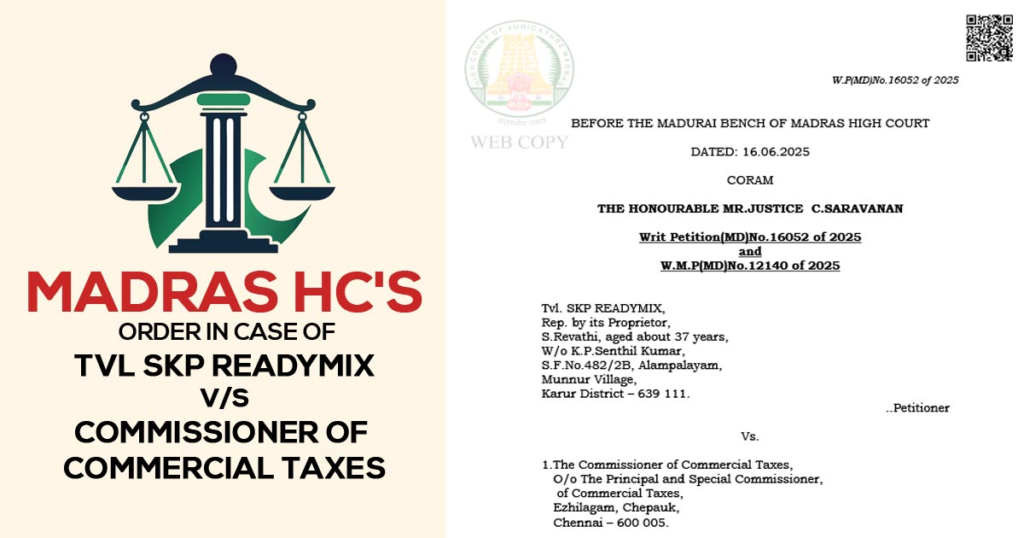
3.1 Tvl. Baqir Brothers v. Deputy State Tax Officer – II
[2026] 182 taxmann.com 421 (Madras High Court)
Issue:
Two separate adjudication orders were passed by different officers for the same tax period.
Held:
- Parallel proceedings for the same tax period are impermissible
- Multiple orders create jurisdictional confusion and violate principles of fairness
Direction of the Court:
- Matter remanded for passing a single consolidated order
- Subject to deposit of 25% of disputed tax
Legal Principle:
There can be only one adjudication for one tax period under Section 73.
3.2 Davinder Chicken Centre v. Sales Tax Officer
[2026] 182 taxmann.com 464 (Delhi High Court)

Issue:
Adjudication order passed without granting effective opportunity of hearing, as no reply to SCN was filed.
Held:
- Opportunity of hearing is not a mere formality
- Non-filing of reply does not justify bypassing personal hearing
Direction of the Court:
- Adjudication order set aside
- Matter remanded for fresh adjudication after granting proper hearing
Legal Principle:
Natural justice is mandatory, irrespective of taxpayer’s response.
3.3 Century Galaxy Developers Ltd. v. Union of India
[2026] 182 taxmann.com 460 (Karnataka High Court)

Issue:
A single composite show cause notice was issued for multiple tax periods / financial years.
Held:
- Each tax period constitutes a separate cause of action
- Composite SCN is without jurisdiction
Direction of the Court:
- SCN quashed
- All consequential proceedings set aside
Legal Principle:
One SCN cannot cover multiple tax periods under Section 73.
4. Comparative Analysis with Earlier Judicial Trends
| Issue | Earlier Position | 2026 Judicial Position |
|---|---|---|
| Multiple orders | Occasionally tolerated | Not permissible |
| Hearing requirement | Procedural | Mandatory |
| Composite SCN | Mixed views | Invalid |
5. Statutory Provisions Interpreted
- Section 73(1): Issuance of SCN
- Section 73(9): Passing of adjudication order
- Section 75(4): Mandatory opportunity of hearing
- Section 75(7): Speaking order requirement
6. Core Principles Emerging from Judgments
- Natural justice is non-negotiable
- One tax period must have one adjudication
- Jurisdictional errors vitiate proceedings
- Section 73 proceedings are corrective, not punitive
- Procedural lapses can nullify valid demands
7. Practical Implications for Directors and Companies
- Verify jurisdiction and authority of officer
- Check whether SCNs are period-specific
- Insist on personal hearing
- Challenge overlapping or composite proceedings
These judgments strengthen taxpayer protection against procedural arbitrariness.
8. The Way Forward
For taxpayers, vigilance regarding procedural compliance is essential.
For tax authorities, strict adherence to statutory procedure will reduce litigation and ensure sustainable tax administration.
FAQ
Q1. What is Section 73 of the CGST Act, 2017?
Section 73 deals with recovery of GST or input tax credit where non-payment, short payment, erroneous refund, or wrongful availment does not involve fraud, wilful misstatement, or suppression of facts.
Q2. Can GST authorities issue multiple orders for the same tax period under Section 73?
No. High Courts have held that only one adjudication order can be passed for a particular tax period. Multiple orders for the same period are legally unsustainable.
Q3. Is personal hearing mandatory in proceedings under Section 73?
Yes. Even if the taxpayer does not file a reply to the show cause notice, grant of proper opportunity of hearing is mandatory. Passing an order without hearing violates principles of natural justice.
Q4. Can a single show cause notice under Section 73 cover multiple tax periods or financial years?
No. Courts have ruled that each tax period constitutes a separate cause of action, and a composite show cause notice covering multiple periods is invalid and without jurisdiction.
Q5. What happens if procedural lapses occur in Section 73 proceedings?
Serious procedural lapses—such as lack of hearing, jurisdictional errors, or defective SCNs—can result in quashing or remand of GST demand orders, even if tax liability exists.
Q6. Do these judgments mean GST demands under Section 73 are illegal?
No. The judgments do not invalidate Section 73 itself. They only clarify that GST demands must strictly follow statutory procedure and principles of natural justice.
Q7. What relief can taxpayers get in such cases?
Courts may:
- Set aside the adjudication order
- Quash defective SCNs
- Remand the matter for fresh adjudication
- Impose conditions like partial deposit of disputed tax
Q8. How are Section 73 and Section 74 different?
Section 73 applies to non-fraud cases, while Section 74 applies where fraud, wilful misstatement, or suppression of facts is alleged and carries stricter consequences.
9. Disclaimer
This document is for educational and informational purposes only and does not constitute professional advice. Readers are advised to consult their tax advisors before taking any action based on the contents herein.