🔹 Introduction
Input Tax Credit (ITC) is the backbone of the GST system, ensuring seamless tax flow and avoiding cascading effect. However, its availability is strictly conditional, and one of the most litigated issues is:
👉 Whether ITC can be denied to a bona fide purchaser due to the supplier’s default?
This issue has led to significant judicial scrutiny, balancing:
- Revenue protection
- Taxpayer fairness
Sochiye …
Aapne:
- GST pay kiya
- Proper invoice li
- Goods receive ki
Phir bhi notice aata hai:
👉 “Supplier ne tax deposit nahi kiya — ITC reverse karo”
Kya yeh fair hai?
📌 Courts ka answer: Nahi — har case mein nahi.
Aaj ke is blog mein hum samjhenge:
- Latest GST case laws
- Legal position
- Practical safeguards
⚖️ Real Problem in GST Today
Aaj kal department:
- GSTR-2B mismatch
- Supplier default
- Fake invoice suspicion
ke naam par ITC deny kar raha hai
👉 Even genuine buyers ko bhi notice mil raha hai
🔹 Brief Legislative Background
Legal Backbone – Section 16 of CGST Act
Section 16 of the CGST Act
👉 ITC is not an absolute right
It is a conditional benefit
Key Risk Areas
⚠ Fake suppliers / bogus billing
⚠ Supplier not filing returns
⚠ Mismatch in GSTR-2B
⚠ Payment delays beyond 180 days
📌 Key Conditions under Section 16(2)
ITC is allowed only if ALL conditions are satisfied:
- ✔ Possession of valid tax invoice
- ✔ Receipt of goods/services
- ✔ Tax actually paid to Government by supplier
- ✔ Return filed by recipients
⚠ Most Critical Condition – Section 16(2)(c)
👉
“ITC can be availed only if tax has been actually paid to the Government.”
📌 This is the core reason for ITC denial in supplier default cases
📊 System-Based Restriction – Section 16(2)(aa)
- Invoice must appear in GSTR-2B
- If not reflected → ITC may be restricted
⏳ 180 Days Rule
- Payment to supplier within 180 days mandatory
- Otherwise:
- ITC reversal
- Interest liability
🔹 Core Legal Issue
👉 Can a genuine buyer lose ITC due to supplier default?
- Buyer has no control over supplier
- Yet law imposes dependency
📌 This creates a conflict between law and fairness
The statutory framework governing ITC includes:
- Section 16(2)(c) of CGST Act
- Section 16(2)(aa) of CGST Act
- Section 38 of the CGST Act
🔹 Detailed Analysis of Judicial Pronouncements
1. D.Y. Beathel Enterprises vs State Tax Officer
Facts:
- ITC denied to purchaser due to supplier default
- Department directly initiated recovery from buyer
Held:
- Department must first proceed against supplier
- Direct recovery from purchaser is not justified
Ratio:
👉 Primary liability lies on supplier
2. LGW Industries Limited vs Union of India
Held:
- ITC cannot be denied without:
- Proper inquiry
- Verification of transaction genuineness
Key Principle:
👉 No mechanical denial of ITC
3. Suncraft Energy Private Limited vs Assistant Commissioner
Held:
- Authorities must:
- Provide opportunity of hearing
- Conduct independent verification
Principle:
👉 Natural justice must be followed
4. Arise India Limited vs Commissioner of Trade & Taxes
Held:
- Bona fide purchaser should not be penalised
- ITC denial unjustified if:
- Seller registered
- Transaction genuine
Relevance in GST:
👉 Though VAT case, heavily relied in GST litigation
🔹 Comparative Judicial View (Very Important )
| Aspect | Strict Legal View | Liberal Judicial View |
|---|---|---|
| ITC Nature | Conditional | Vested right (if genuine) |
| Supplier Default | ITC denied | ITC allowed if bona fide |
| Burden of Proof | On taxpayer | On department also |
| Approach | Technical | Equitable |
👉 Courts are shifting towards protecting genuine taxpayers
🔹 Interpretation of Statutory Provisions
Section 16(2)(c) – Critical Condition
- Tax must be paid to Government
👉 Department interpretation:
- If supplier defaults → ITC denied
👉 Judicial interpretation:
- Apply condition reasonably, not blindly
Section 38 – ITC Restriction Mechanism
- System flags risky ITC
- Restricts credit based on supplier profile
👉 Issue:
- Automated restriction vs natural justice
🔹 Core Principles Emerging from Judgments
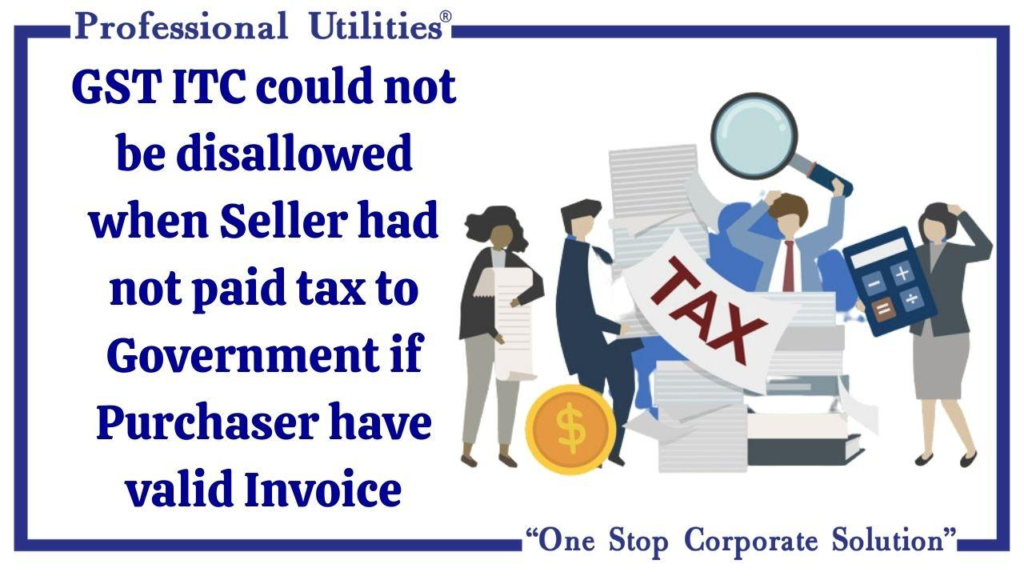
✅ 1. Bona fide purchaser should not be penalised
✅ 2. Department must act against supplier first
✅ 3. ITC cannot be denied mechanically
✅ 4. Proper inquiry and verification is mandatory
✅ 5. Principles of natural justice must be followed
🔹 Practical Implications for Taxpayers
For Businesses
- Vendor due diligence is critical
- Continuous compliance monitoring required
- To safeguard ITC:
- ✅ Before Purchase
- Verify supplier GSTIN
- Check filing status
- Review past compliance
- ✅ During Transaction
- Ensure proper invoice
- Match details in GSTR-2B
- ✅ After Purchase
- Track supplier return filing
- Reconcile ITC regularly
For Professionals
- Strong documentation required
- Legal defence based on case laws
For Department
- Cannot deny ITC arbitrarily
- Must follow fair procedure
🔹 Guidance Notes (Very Important )
👉 1. Perform Vendor Risk Assessment
- Check GST return filing status
- Avoid suspicious suppliers
👉 2. Regular ITC Reconciliation
- Match with GSTR-2B
- Identify mismatches early
👉 3. Maintain Proper Documentation
- Tax invoice
- Payment proof
- Delivery proof
👉 4. Avoid High-Risk Transactions
- Unregistered suppliers
- Abnormally low pricing
👉 5. Legal Preparedness
- Keep case laws ready
- Respond properly to notices
🔹 The Way Forward
GST law is evolving:
✔ Government focusing on compliance enforcement
✔ Courts focusing on taxpayer protection
👉 Future direction:
- More system-driven ITC controls
- Balanced judicial intervention
🔹 Conclusion
The issue of ITC denial due to supplier default lies at the intersection of:
- Legal compliance
- Commercial reality
- Judicial fairness
👉 While law imposes strict conditions, courts have clarified:
📌 “Genuine taxpayers cannot be punished for supplier’s fault without proper verification.”
However:
👉 Due diligence is now a business necessity, not an option
🔹 FAQ
Q1. Is ITC an absolute right under GST?
No, ITC is a conditional right subject to Section 16 compliance.
Q2. Can ITC be denied solely due to supplier non-payment?
Legally yes, but courts have held that bona fide buyers should not be penalised without proper inquiry.
Q3. What is the role of Section 16(2)(c)?
It requires actual tax payment to Government, forming the basis of ITC eligibility.
Q4. Can ITC be restored if supplier later pays tax?
Generally yes, subject to conditions and reconciliation.
Q5. What is the safest approach for businesses?
- Vendor verification
- Regular reconciliation
- Proper documentation
Disclaimer
This publication is intended solely for informational and educational purposes and does not constitute professional, legal, tax, or financial advice. The information provided has been compiled from sources believed to be reliable; however, its accuracy, completeness, or current relevance is not guaranteed. The views and opinions expressed herein reflect the author’s understanding at the time of publication and are subject to change without notice.
Readers are strongly advised to seek independent professional advice before making any decision or taking any action based on the information contained in this publication. The author and publisher expressly disclaim any responsibility or liability for any loss, damage, or consequence arising directly or indirectly from reliance on this content or from any action taken or not taken based on it.