Analysis of Sakshi Enterprises & Shriyaa Enterprises Decisions
📌 Relevant Legal Provision
Section 29 of the CGST Act, 2017 – Cancellation of Registration
Section 29 empowers the GST authorities to cancel a registered person’s GST registration under specified circumstances, including:
- Non-filing of GST returns for a continuous period
- Contravention of provisions of the GST Act
- Registration obtained by fraud or misrepresentation
However, cancellation is not intended to be punitive, especially when the taxpayer is willing to comply and clear all dues.
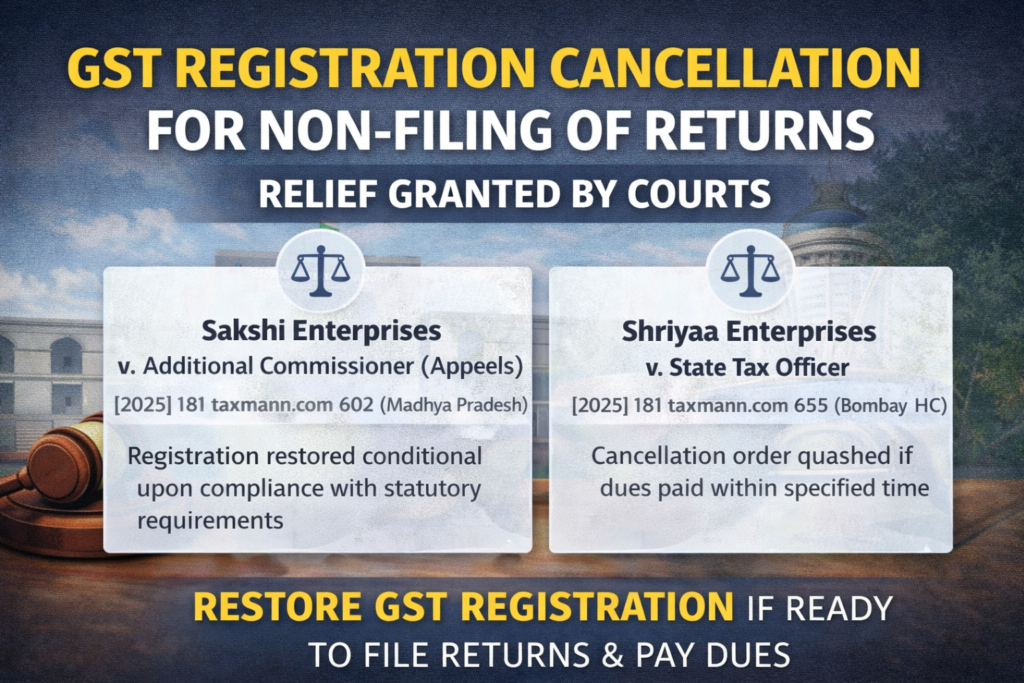
⚖️ Case 1: Sakshi Enterprises v. Additional Commissioner (Appeals)
[2025] 181 taxmann.com 602 (Madhya Pradesh High Court)
🔹 Facts of the Case
- GST registration of the petitioner was cancelled due to non-filing of returns.
- The petitioner explained that non-compliance occurred due to adverse circumstances.
- The petitioner expressed readiness to:
- File all pending returns
- Pay applicable tax, interest, and late fees
🔹 Issue Before the Court
Whether GST registration can be restored when:
- Returns were not filed due to hardship, and
- The assessee is now willing to comply with statutory requirements?
🔹 Observations of the Court
The High Court observed that:
✔ Cancellation of registration severely affects business continuity
✔ GST law is a compliance-based system, not a penal one
✔ If the taxpayer is willing to comply, cancellation should not be permanent
✔ Revenue interest remains protected if dues are paid
🔹 Final Decision
✅ Registration ordered to be restored
✅ Subject to:
- Filing of all pending GST returns
- Payment of tax, interest, and applicable late fees
- Compliance with statutory requirements
📌 Key Takeaway
GST registration should not be cancelled permanently if the taxpayer shows genuine intent to comply.
⚖️ Case 2: Shriyaa Enterprises v. State Tax Officer
[2025] 181 taxmann.com 655 (Bombay High Court)
🔹 Facts of the Case
- GST registration cancelled due to non-filing of returns for six months
- The assessee approached the Court stating:
- Willingness to file all pending returns
- Readiness to pay all dues within 15 days
🔹 Legal Issue
Whether GST registration can be restored when:
- Returns were not filed for a prolonged period
- Assessee undertakes to comply within a fixed time?
🔹 Court’s Observations
The Bombay High Court held:
✔ GST registration is essential for carrying on business
✔ Cancellation should not be mechanical
✔ Purpose of GST law is revenue collection, not business closure
✔ Willingness to comply must be given due weight
🔹 Final Order
✅ Cancellation order quashed and set aside
✅ Restoration allowed subject to:
- Filing pending returns
- Payment of taxes and dues within 15 days
- Compliance with GST provisions
📘 Legal Position Under Section 29 – Explained Simply
| Provision | Legal Position |
|---|---|
| Section 29(2) | Registration can be cancelled for non-filing of returns |
| Section 30 | Registration can be revoked if conditions are fulfilled |
| Court View | Cancellation should not be permanent if compliance is possible |
| Principle Applied | Natural Justice & Business Continuity |
⚖️ Judicial Trend Emerging from These Cases
✔ Courts favor restoration over cancellation
✔ Compliance opportunity must be given
✔ Revenue interest > punitive action
✔ GST law is facilitative, not destructive
🧾 Important Legal Principle Established
“Where the assessee is ready and willing to file pending returns and pay dues, GST registration should be restored rather than permanently cancelled.”
✅ Practical Takeaways for Taxpayers
✔ Delay in filing returns is curable
✔ Registration cancellation is not final
✔ Courts allow restoration if:
- Taxpayer shows bona fide intention
- Dues are cleared
- Compliance is assured
✔ Filing writ petition is effective remedy in genuine cases
📌 Conclusion
The decisions in Sakshi Enterprises and Shriyaa Enterprises reaffirm that:
✔ GST registration should not be cancelled mechanically
✔ Taxpayers must be given a fair opportunity
✔ Compliance-based approach must prevail
✔ Courts consistently protect genuine businesses
These rulings provide strong legal support to taxpayers facing cancellation due to non-filing of returns.